

Lost in the Dark
Student Project (17 developers)
Platform: PC
Release: December 8, 2017
Level Designer
Responsibilities:
-
Pitched, implemented, and polished scripted enemy encounters using Unreal Blueprint
-
Prototyped gameplay mechanics using Unreal Blueprint
-
Integrated proprietary profiling tools to collect and interpret user research data using Unreal Blueprint
-
Recorded gameplay footage for promotional trailers using Unreal Sequencer
Audio Designer
Responsibilities:
-
Designed dynamic procedural background music system using Wwise and Unreal Blueprints
-
Recorded, implemented, and polished all foley sound effects using Wwise and Unreal Blueprints
-
Manage communication and feedback with remote audio partners
DESIGN GOALS
Data-Driven Level Design
Early in development, the team had conflicting opinions about what changes were critical to achieving our design goals. I collaborated with the Game Designer and programmers to collect and interpret gameplay data to track how players were navigating the space, interacting with enemies, and using our core mechanics. I was in charge of integrating a proprietary profiler tool in Unreal Blueprints, collecting data, and extrapolating the data into an action plan for the design team. As a result, the team was able to iterate on the game design and level design more quickly and efficiently by using targeted data.

Exploration
Unpredictable Encounters
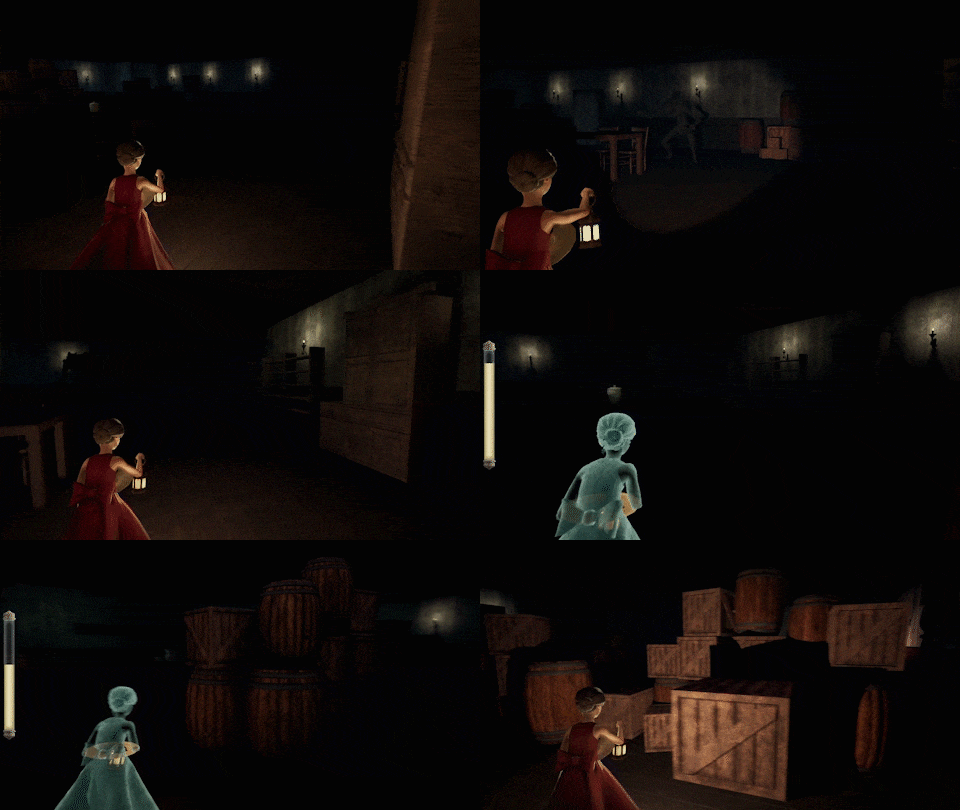
Our central design goal was to make players feel vulnerable throughout every level, almost perpetually in danger. At the same time, we had to balance this against showing our monster too often, or else the player would not feel scared or tense. Our solution was to design encounters that establish player expectations for when they might run into the monster, and then subvert those expectations at key moments. This made it more difficult for playtesters to predict enemy behaviors and added to the horror aspects of the gameplay.
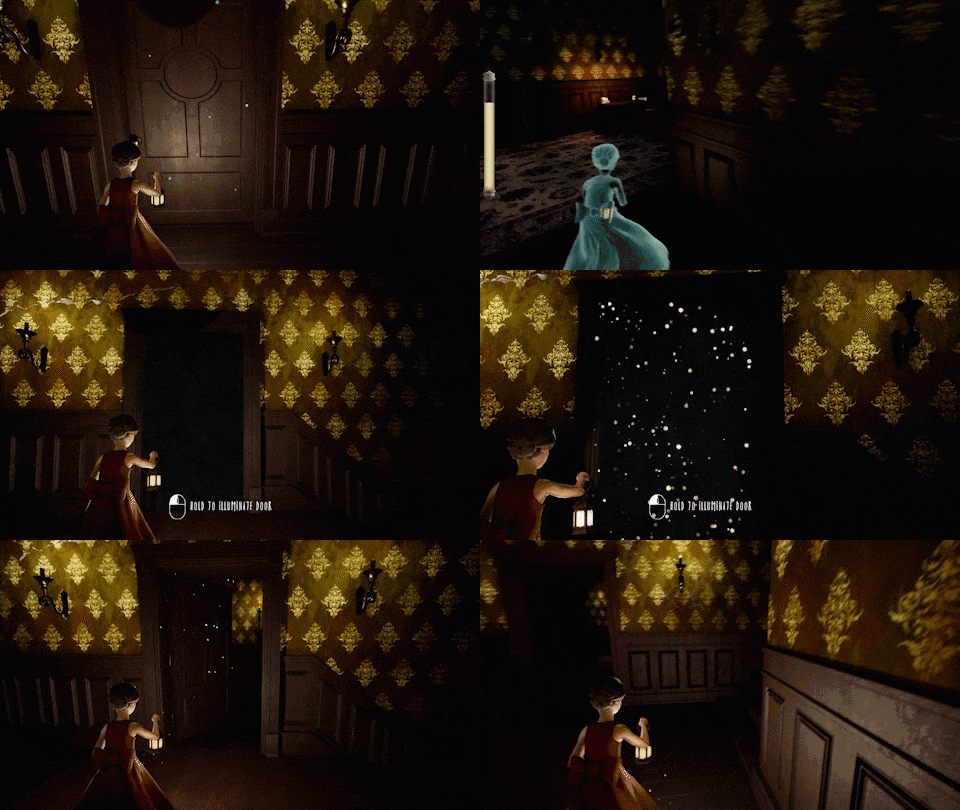
While we wanted players to be afraid of running into the monster, our design also encourages players to explore the world. The player starts in a well-lit safe room, and then must wade through dark, dangerous areas in search of the next safe room. We designed mechanics for the player's lantern to help them explore the world: casting the lantern like a spotlight helped illuminate the space and open sealed doors, while hiding the lantern allowed the player to fade through hidden walls, each at the significant cost of a decreasing health bar and lowered player speed. We designed exploration as an act of vulnerability as we push-and-pulled players through each level.
AUDIO GOALS
Procedural Soundtrack
As the sole audio designer on a game that focused on building high tension, I wanted to make sure the soundtrack was unpredictable as well to amplify our core design. I chose to make a dynamic soundtrack that responded to game parameters in real time. I designed this system in Wwise using a combination of vertical and horizontal project structure, where each layer of the soundtrack could be added to or subtracted from the mix according to the player's state, player's health, and proximity to the monster. The result was a complex soundtrack that consistently made players feel tense and uneasy throughout the game.


Scripting with Blueprints
In addition to scripting the game's procedural soundtrack, I designed over a hundred sound events using Audacity, Adobe Audition, and Wwise. I was responsible for scripting all of the sound effects in the game using Unreal Blueprints. This allowed me to contribute to almost all of the Blueprints in the game, including all of our core game mechanics and AI.
Managing an External Developer
I worked closely with an external composer to write and perform all of the music in our game. My primary goals for this relationship were to iterate based on comprehensive feedback from developers and playtester data, and allow the composer a large degree of creative freedom and ownership. I compiled feedback from playtest surveys and team-wide developer notes tailored to each specific track and discussed that feedback with the composer on a bi-weekly basis, along with a copy of the latest build showing how the music was appearing in-game. This allowed us to make precise qualitative changes to address the game's needs and integrate the composer as part of the team's pipeline despite working externally.

Gallery
 |  |  |
|---|---|---|
 |  |